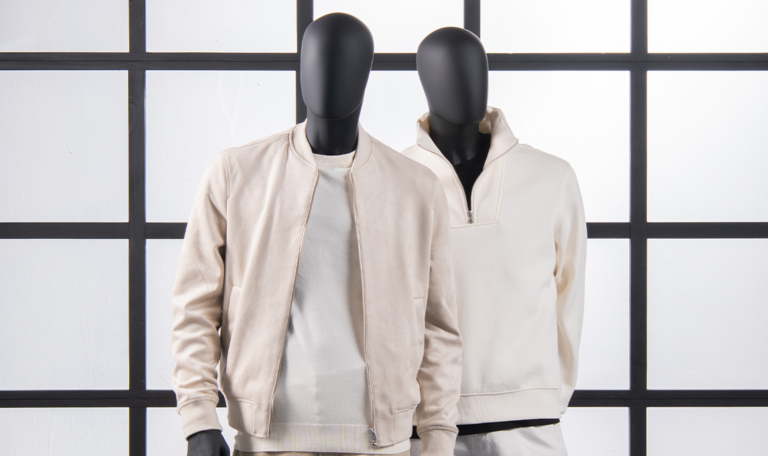
Retailers should know that store displays, particularly mannequins, are produced through a combination of material selection, moulding, finishing, and quality control, with sustainability practices varying significantly between manufacturers. The production method and materials used directly affect durability, visual quality, and your brand’s environmental footprint. Below, we answer the most common questions retailers have about how display fixtures are actually made.
What materials are retail store displays actually made from?
Most retail mannequins are made from one of three materials: fiberglass, polyurethane, or polystyrene. Fiberglass and polyurethane dominate production in overseas factories, particularly in China, while polystyrene is the material of choice for manufacturers focused on recyclability and sustainable retail display materials. The material you choose affects everything from finish quality to what happens to the mannequin at the end of its life.
Fiberglass is durable and takes paint well, but it is difficult to recycle and can release harmful particles during manufacturing. Polyurethane offers flexibility in shaping but shares similar end-of-life challenges. Polystyrene, by contrast, is 100% recyclable and can go through multiple recycling cycles, including mechanical recycling, which is the most widely available and cost-effective method. This makes it possible to use recycled polystyrene to produce new mannequins, supporting a genuinely circular production model.
For display accessories and packaging, FSC-certified cardboard and wood are the responsible standard. FSC (Forest Stewardship Council) certification confirms that materials come from responsibly managed forests, which matters when retailers are auditing their supply chain for sustainability credentials.
How does the manufacturing process for mannequins work?
Mannequin manufacturing typically involves four stages: material preparation, moulding, surface finishing, and quality control. The moulding stage, often done through blow-moulding for polystyrene mannequins, shapes the raw material into the desired form. Surface finishing includes sanding, priming, painting, and adding details like wigs, eyes, or magnetic fittings. Each stage requires skilled hands and precise quality checks to achieve a consistent result at scale.
Blow-moulding is particularly well-suited to polystyrene production because it creates hollow, lightweight mannequin bodies without sacrificing structural integrity. This also reduces the volume of raw material needed per unit compared to solid casting methods.
Surface finishing is where visual identity really takes shape. Paints and polishes determine the final look and feel of the mannequin, and the choice of products matters both aesthetically and environmentally. Water-soluble paints and polishes, which make up around 90% of what responsible manufacturers use, significantly reduce the release of volatile organic compounds compared to solvent-based alternatives.
Quality control runs throughout the process rather than only at the end. Checking dimensions, surface consistency, and fitting compatibility at each stage prevents defects from compounding, which keeps production timelines tight and reduces waste.
What does ‘custom mannequin production’ actually involve?
Custom mannequin production means designing and manufacturing a mannequin from scratch to match your brand’s specific requirements, including body proportions, pose, surface finish, and any branded details. It is not simply selecting a colour or adding a logo to an existing model. True custom production involves sculpting original moulds, which requires experienced sculptors and designers working closely with the client from concept through to final approval.
The process typically moves through these stages:
- Briefing and concept development — defining the pose, proportions, gender, and overall aesthetic direction
- Drawing and design — translating the brief into technical drawings and visual references
- Sculpting the mould — creating the physical mould from which all production units will be made
- Sample approval — producing a first unit for client review and sign-off before full production begins
- Full production run — manufacturing the agreed volume to the approved specification
Having all of this happen under one roof makes a significant difference to timelines and communication. When designers, sculptors, and production teams work in the same facility, feedback loops are short and adjustments happen quickly. Splitting these stages across multiple suppliers or continents introduces delays, inconsistencies, and coordination risk.
How sustainable are modern retail display manufacturing practices?
Sustainability in retail display manufacturing varies widely. At one end, manufacturers using fiberglass or polyurethane with solvent-based paints and long-haul freight from Asia present a high environmental footprint. At the other end, manufacturers using recyclable materials, renewable energy, water-soluble finishes, and nearshored supply chains represent a genuinely lower-impact approach. The gap between these two ends is significant, and it is growing as more retailers set environmental targets for their supply chains.
Key indicators of genuinely sustainable fixture manufacturing include:
- Material recyclability — whether the core material can be mechanically recycled and reused in new products
- Renewable energy use — whether production facilities run on certified renewable electricity
- GHG emissions tracking — whether the manufacturer measures Scope 1 and Scope 2 emissions and sets reduction targets
- Air quality controls — whether production facilities operate air-cleaning systems and hold valid pollution permits
- Supply chain proximity — whether raw materials and components are sourced locally or regionally to reduce transport emissions
- Packaging certification — whether cardboard and wood packaging carries FSC certification
Renewable energy manufacturing is increasingly the baseline expectation rather than a differentiator. Manufacturers that source electricity exclusively from renewable sources and set binding targets to reduce emissions per unit produced are the ones best positioned to support retailers with sustainability reporting requirements.
Labor standards are also part of the sustainability picture. Manufacturers aligned with the UN Global Compact commit to internationally recognized human rights standards, prohibiting forced labor, child labor, and workplace discrimination. For retailers with supply chain transparency obligations, this matters as much as the environmental side.
What should retailers look for when choosing a display manufacturer?
When choosing a display manufacturer, retailers should evaluate five things: material quality and recyclability, manufacturing location and lead times, customization capability, sustainability credentials, and communication reliability. A manufacturer that scores well on all five gives you a production partner, not just a supplier.
Here is what each factor actually means in practice:
- Material quality and recyclability — ask specifically what the mannequins are made from, whether the material is recyclable, and what the manufacturer’s approach is to end-of-life product handling
- Manufacturing location — European production reduces freight distances, shortens lead times, and makes it easier to visit and audit the facility
- Customization capability — check whether the manufacturer has in-house sculptors and designers, or whether custom work is outsourced
- Sustainability credentials — look for third-party verified ratings such as EcoVadis, FSC certification, and documented GHG reduction targets rather than self-reported claims
- Communication and service — a manufacturer that assigns a dedicated project manager and keeps you informed at each production stage is far more valuable than one that only contacts you when there is a problem
For retailers managing multiple store locations or rolling out new concepts across markets, scalability is also relevant. A manufacturer with a high annual production capacity and a flexible shift structure can absorb large orders without pushing your delivery dates.
How long does it take to produce retail display fixtures?
Production timelines for retail display fixtures depend on whether you are ordering from an existing catalogue or commissioning custom designs. Standard catalogue mannequins can typically be produced and shipped relatively quickly. Custom mannequin production, which involves sculpting new moulds and approval stages, generally takes longer, with timelines varying based on complexity, order volume, and how quickly client approvals move through the process.
The single biggest factor affecting speed is whether production happens under one roof. When design, sculpting, moulding, finishing, and quality control all take place in the same facility, there are no handoffs between suppliers, no waiting for components to arrive from elsewhere, and no coordination delays. A two-shift production cycle also means a manufacturer can respond to urgent orders without disrupting existing schedules.
Geographic proximity between manufacturer and retailer reduces freight time meaningfully. A European manufacturer shipping to a European retailer operates on a fundamentally different timeline than one shipping from Asia, where ocean freight alone adds several weeks before production lead time is even counted.
If you are planning a store rollout or seasonal refresh, the practical advice is to build approval stages into your timeline from the start. The fastest manufacturers in the world cannot recover time lost to slow internal sign-off processes on the client side.
At IDW Display, we bring together everything covered in this article: polystyrene mannequins that are 100% recyclable, renewable energy manufacturing, in-house design and sculpting, and a European factory built for speed and flexibility. If you want to understand more about how we approach sustainable display production, or if you are ready to talk about your next project, get in touch with us and we will take it from there.
Frequently Asked Questions
Can I return or recycle my old mannequins when switching to a new display range?
This depends entirely on the material your existing mannequins are made from. Polystyrene mannequins can be mechanically recycled and, in some cases, returned to the manufacturer for reprocessing into new units — making them the most practical option for a circular end-of-life process. Fiberglass and polyurethane mannequins are much harder to recycle through standard channels, so if you are planning a future refresh, switching to recyclable materials now will make that transition significantly easier and more sustainable.
What is the minimum order quantity for custom mannequin production?
Minimum order quantities vary between manufacturers and depend on the complexity of the custom design, but the key cost driver in custom production is the mould — a one-time investment that is amortised across the full production run. Smaller initial runs are possible but will carry a higher per-unit cost. If you are planning a phased rollout across multiple stores, it is worth discussing projected total volumes upfront with your manufacturer, as this can significantly affect pricing and how the mould cost is structured.
How do I verify a manufacturer's sustainability claims before committing to an order?
Self-reported sustainability claims should always be backed by third-party verification — look specifically for EcoVadis ratings, FSC certification for packaging and wood materials, and documented Scope 1 and Scope 2 GHG emissions data with reduction targets. Ask whether you can visit or audit the production facility, and check whether the manufacturer is aligned with internationally recognised frameworks such as the UN Global Compact. Vague language like ‘eco-friendly’ or ‘green manufacturing’ without supporting evidence should be treated as a red flag.
What happens if the sample unit doesn't meet our expectations during the approval stage?
The sample approval stage exists precisely to catch and resolve issues before full production begins, so requesting revisions at this point is entirely normal and expected. A manufacturer with in-house sculptors and designers can make adjustments quickly — whether that involves reworking proportions, changing the surface finish, or refining branded details — and produce a revised sample for sign-off. The important thing is to be as specific as possible with your feedback, referencing exact measurements, visual references, or finish comparisons, so that revisions are targeted rather than iterative.
Are European-made mannequins significantly more expensive than those manufactured in Asia?
The unit price from an Asian manufacturer may appear lower on paper, but the true cost comparison needs to account for ocean freight, extended lead times, import duties, the cost of holding larger buffer stock, and the practical difficulty of auditing a facility thousands of miles away. European production also reduces the risk of costly delays caused by port congestion, customs hold-ups, or communication gaps across time zones. For retailers who factor in total landed cost and supply chain risk, the gap between European and Asian manufacturing is often much smaller than the headline unit price suggests.
How should I brief a manufacturer if I want a mannequin that reflects a specific brand aesthetic?
The more concrete and visual your brief, the better the outcome. Start by compiling reference images that capture the pose, body proportions, facial style (if applicable), and surface finish you are aiming for — mood boards, campaign photography, and competitor examples all help. Define any non-negotiables upfront, such as specific measurements, fitting types, or finish requirements, and be clear about the retail context the mannequin will be used in (window display, in-store fixture, photography, etc.). A manufacturer with in-house designers will typically offer a briefing session to work through these details before any sculpting begins, which is worth taking full advantage of.
What common mistakes do retailers make when ordering display fixtures for a store rollout?
The most common mistake is underestimating how long the approval process takes on the client side and building timelines that assume instant internal sign-off. Other frequent issues include ordering based on price alone without assessing material quality or recyclability, failing to confirm that the manufacturer has genuine in-house customisation capability rather than outsourcing it, and not accounting for freight time when comparing manufacturers across different regions. Starting conversations with your manufacturer earlier than feels necessary — ideally at the concept stage of a rollout — consistently produces better results than treating display production as a last-minute logistics task.
Related Articles
- What role does supplier transparency play in retail sustainability reporting?
- How are retailers setting and reporting on sustainability targets for their physical stores?
- How does a store environment reflect a brand's commitment to sustainability?
- What role does supplier location play in a retailer's scope 3 emissions?
- How does where a product is manufactured affect its environmental footprint?
- What questions should retailers ask when evaluating a supplier's sustainability credentials?
- What is the difference between commercial and artistic window display design?
- How do you use storytelling in retail display design?
- Why do some in-store displays fail to convert browsers into buyers?
- What visual merchandising techniques work best for fashion retailers?
- How do you transition a store display from one season to the next?
- What is the purpose of window display design?
- How do you plan a seasonal changeover in retail displays?
- How do you create an effective in-store display?
- What trends are shaping fashion retail displays in 2026?